
Infineon BSP295H6327XTSA1 P-Channel MOSFET: Datasheet, Features, and Application Circuit Design
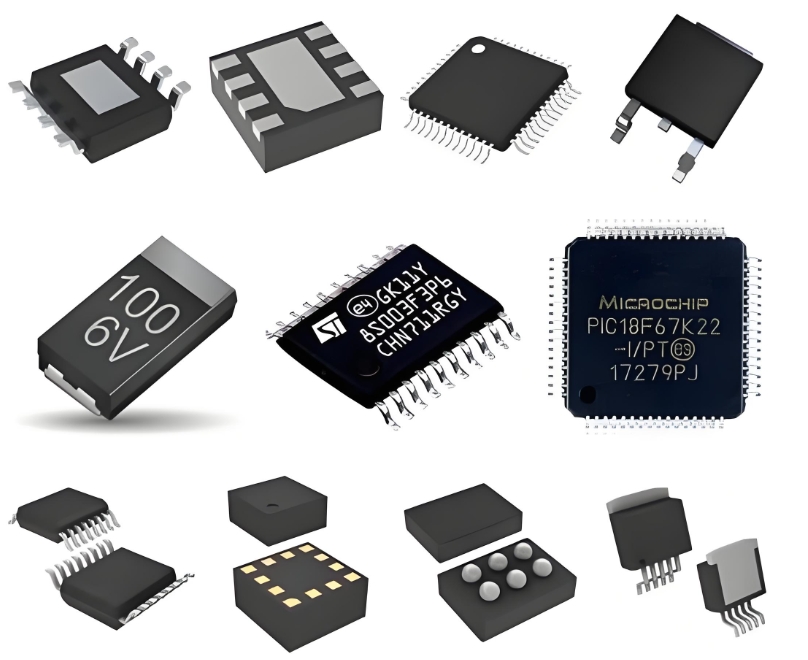
The Infineon BSP295H6327XTSA1 is a state-of-the-art P-Channel Power MOSFET housed in a compact SOT-223 surface-mount package. Engineered for high efficiency and robustness, this component is a preferred choice for designers seeking reliable power management and switching solutions in space-constrained applications. This article delves into its key specifications, standout features, and a practical application circuit design.
Datasheet Overview and Key Specifications
The BSP295HSTR belongs to Infineon's esteemed product portfolio, optimized for low voltage and high-current switching. Its primary electrical characteristics, as defined in its datasheet, include:
Drain-Source Voltage (VDS): -60 V. This rating makes it suitable for a wide range of applications, including 24V and 48V systems.
Continuous Drain Current (ID): -3.8 A. It can handle substantial current, enabling control of significant loads.
On-Resistance (RDS(on)): < 95 mΩ at VGS = -10 V. The extremely low on-resistance is a critical feature, as it minimizes conduction losses and improves overall system efficiency by reducing heat generation.
Gate Threshold Voltage (VGS(th)): Typically -2.5 V. This ensures compatibility with standard logic-level signals from microcontrollers (3.3V or 5V), simplifying drive circuitry.
Salient Features
The BSP295H6327XTSA1 is packed with features that enhance performance and reliability:
Logic Level Compatible: It can be fully enhanced with gate-source voltages as low as -10V, and often sufficient switching is achieved with -4.5V, making it ideal for direct control by microcontrollers and digital logic ICs without needing a level shifter.
High Power Density: The SOT-223 package offers an excellent balance between compact size and power-handling capability, allowing for denser PCB layouts.
Exceptional Switching Performance: The device is characterized by fast switching speeds, which is crucial for high-frequency PWM applications such as switch-mode power supplies (SMPS) and motor drives, reducing switching losses.
100% Avalanche Tested: This rigorous testing guarantees robustness and reliability in harsh operating conditions where voltage spikes may occur, protecting the circuit from unexpected transients.
Application Circuit Design: Load Switch with Microcontroller Interface
A common application for a P-Channel MOSFET is as a high-side load switch. The following circuit demonstrates how to interface the BSP295H6327XTSA1 with a microcontroller (MCU) to control a load connected to a 12V rail.
Components:
MCU (3.3V or 5V GPIO)
Infineon BSP295H6327XTSA1 (Q1)
N-Channel MOSFET (Q2, e.g., BSS138) or an NPN Bipolar Junction Transistor (BJT)
Resistors: R1 (10kΩ), R2 (10kΩ)
Circuit Operation:
1. Objective: The MCU's GPIO pin (3.3V) controls a 12V, 2A load (e.g., a motor, LED strip).
2. Implementation: The P-Channel MOSFET (Q1) is placed on the high side (between the 12V supply and the load). Its source is connected to 12V. Since a P-Channel MOSFET is turned on by applying a negative voltage relative to its source (VGS < 0), a simple driver stage using a small-signal N-Channel MOSFET (Q2) is used.
3. OFF State (Load Disabled): When the MCU GPIO is set to logic LOW (0V), Q2 is off. Resistor R1 pulls the gate of Q1 (BSP295H) up to the 12V rail. This results in VGS ≈ 0V, keeping Q1 firmly off.
4. ON State (Load Enabled): When the MCU GPIO is set to logic HIGH (3.3V), Q2 turns on. This pulls the gate of Q1 down to ground through Q2. The voltage difference between the source (12V) and gate (0V) is now -12V (VGS = -12V), which is well below the threshold voltage, fully enhancing Q1 and allowing current to flow from the 12V supply through the load to ground.
5. Key Design Note: Resistor R2 (a gate-to-source resistor for Q1) is optional but highly recommended to ensure Q1 turns off reliably in case the MCU pin is in a high-impedance state during startup.
The Infineon BSP295H6327XTSA1 stands out as a highly efficient and robust P-Channel MOSFET, perfectly suited for modern power switching tasks. Its logic-level compatibility, low RDS(on), and high power density make it an superior choice for designers working on space-constrained, high-efficiency applications such as DC-DC converters, battery management systems, and high-side load switching. Its proven avalanche ruggedness further ensures long-term reliability in demanding environments.
Keywords: P-Channel MOSFET, Logic Level, Low RDS(on), High-Side Switch, SOT-223.

